Why does Speyside have its own regional identity?
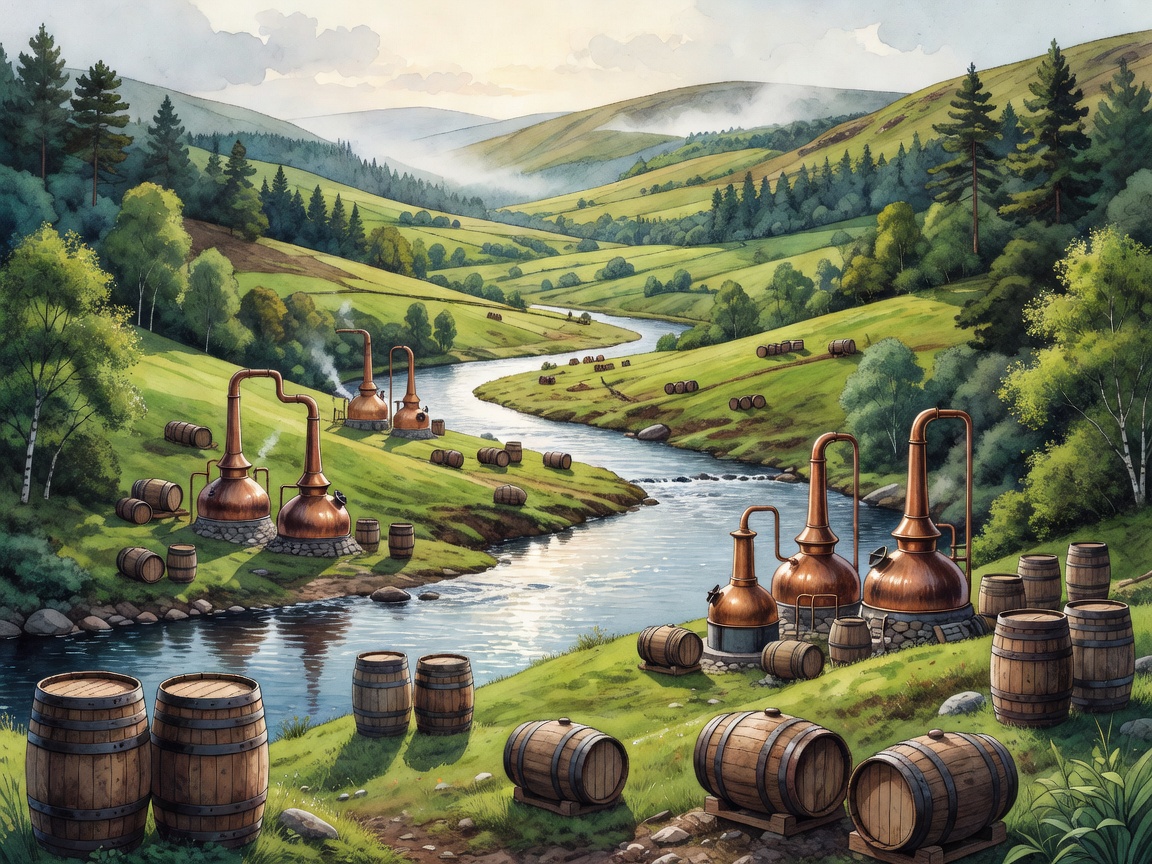
Speyside sits around the River Spey and its tributaries in north-east Scotland. The region contains a concentrated group of distilleries, historically supported by water, barley-growing connections, transport routes and a long relationship with illicit and licensed distilling. Its identity developed through geography and trade, not through a committee assigning flavours.
Many Speyside whiskies are associated with orchard fruit, honey, cereal sweetness and dried fruit. Those notes can come from fermentation, copper contact, distillation cuts and oak. The region itself does not manufacture them. A light spirit matured in refill bourbon casks will present differently from a weightier spirit finished in a sherry-seasoned cask.
What happens before the cask?
Malting converts barley starch into fermentable sugars. Most Scotch malt whisky now uses industrial maltings, so local water is not a guarantee of a local raw-material flavour. Fermentation length matters: longer fermentation allows more esters and other compounds to develop, while yeast choice and washback practice also affect the new make.
Still shape and copper contact then influence texture. Tall stills and reflux generally encourage a lighter spirit; shorter, broader stills and less reflux can retain more weight. The distiller’s cut points matter too. These are production mechanisms, not regional slogans, and they explain why two neighbouring distilleries can disagree politely in the glass.
Why is sherry cask influence so prominent?
Speyside has a strong historical association with sherry-seasoned oak, partly because sherry casks became available through established trade routes. A cask previously used for oloroso or Pedro Ximénez can contribute dried-fruit, spice, nutty and richer flavours, although the result depends on the wood, seasoning, fill history and time in cask.
American oak ex-bourbon casks bring a different set of possibilities, including vanilla, coconut and soft sweetness. Refill casks contribute less wood-derived flavour and allow spirit character to remain clearer. “Sherry matured” therefore tells you something useful, but not everything you need to know.
How should you compare labels?
Start with age, but do not stop there. Age states the youngest whisky in the bottle, not the average. Look for cask information, maturation or finishing language, peat indication, strength and whether colouring or chill filtration is disclosed. Independent bottlers may provide a cask number, bottling date and exact distillery name; official labels may be more restrained.
Compare like with like: similar age, similar cask type and similar strength. Otherwise you may be comparing oak management with geography and wondering why the map has failed you.
What is the sensible conclusion?
Use Speyside as a prompt to investigate balance. Ask whether fruit comes from fermentation, distillation, oak or a combination. The region is especially useful for seeing how a broad reputation can contain many styles: elegant, rich, waxy, grassy, nutty and occasionally smoky examples all exist within the same administrative shorthand.