How did the Lowland style develop?
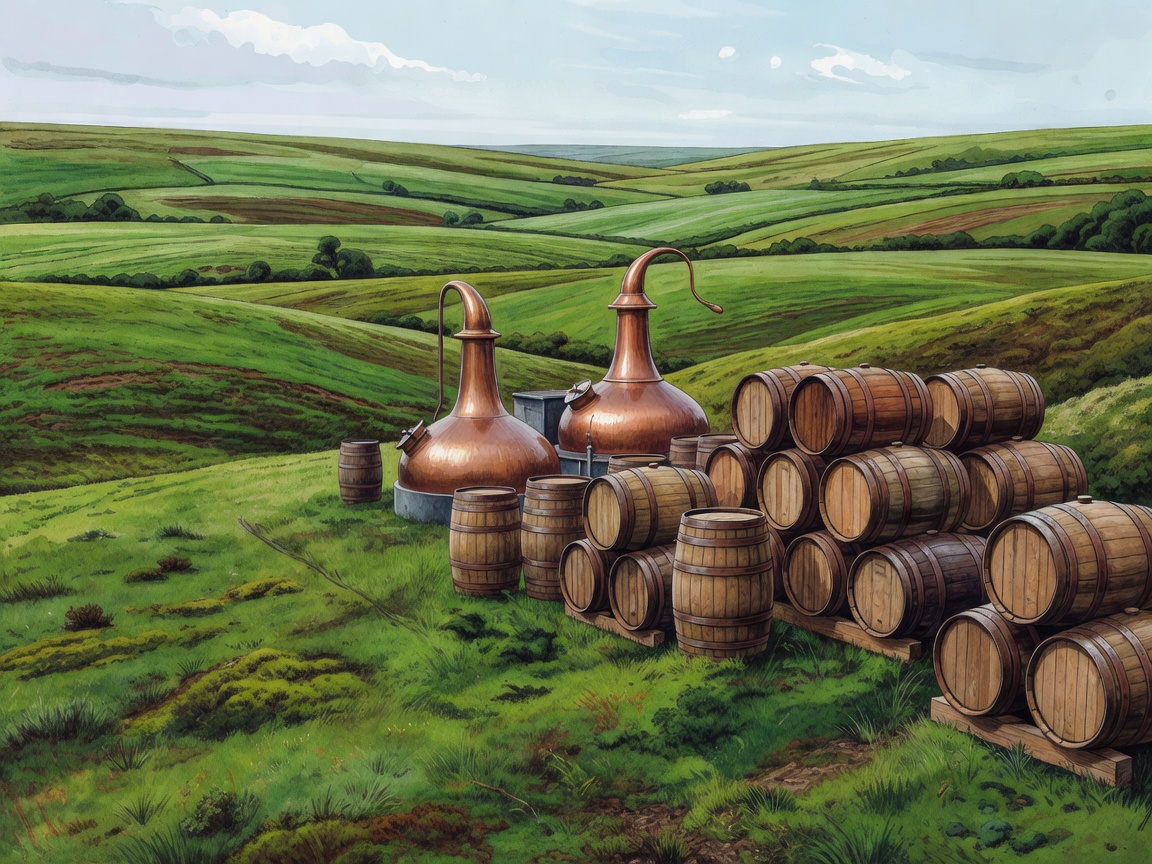
The Lowlands include the southern part of mainland Scotland, historically closer to major population centres, ports, grain markets and industrial routes. Grain whisky production became especially important, while several malt distilleries developed reputations for lighter spirits. The old distinction between Lowland and Highland whisky was shaped by geography, trade and production practice rather than by a universal flavour rule.
Lowland whisky is often associated with floral, citrus, cereal and grassy notes. These may reflect spirit character, distillation style, fermentation and maturation. The category can also include richer or lightly smoky examples, so the old idea of one soft Lowland profile has become rather threadbare.
What does triple distillation change?
Triple distillation passes spirit through three stills or distillation stages rather than the more common two. Additional distillation can increase refinement and reflux, producing a lighter spirit, although still design, cut points and process management remain important. Triple distillation is therefore a mechanism, not a guarantee of a particular tasting note.
Not every Lowland malt uses triple distillation, and not every lightly flavoured whisky is triple distilled. Check producer information where it is available. A label that simply says Lowland tells you less than a label that also identifies the distillation method, cask and strength.
How does malt affect the result?
Single malt Scotch whisky is made from malted barley at one distillery. The malt may be dried without peat smoke, which supports a clean and cereal-led profile, but unpeated malt does not mean flavourless malt. Kilning, fermentation and the distillation regime still create differences.
Grain whisky uses grains such as wheat or maize alongside malted barley and is produced in column stills. It is not the same category as Lowland single malt, although both may be made in the region. Reading “Lowland” without reading “single malt” or “grain” is a small error with a large ability to derail comparison.
What role does oak play?
Light spirit can be a clear window for cask influence. First-fill bourbon barrels may contribute vanilla, coconut and sweet spice. Refill oak gives less extraction and can preserve floral or cereal notes. Wine and sherry-seasoned casks can add fruit, tannin and spice, sometimes shifting a delicate spirit into a more assertive register.
Finishing is especially important to identify. A whisky matured mainly in one cask and finished in another has a different story from whisky matured throughout in the second cask. Marketing language can make both sound equally dramatic. The liquid remains less impressed.
How should the label guide a choice?
Look for single malt or grain, age, strength, distillation method, cask type and any statement about peat. If the label is quiet, do not fill the gaps with regional folklore. Compare Lowland bottles with similar cask histories, then ask whether the lighter body comes from spirit, oak, dilution or all three.
What is the practical lesson?
Lowland whisky rewards attention to texture. Lightness can mean floral lift, clean cereal, citrus, dry grass or a polished finish. It can also mean a heavily active cask has taken the microphone. The region is a starting point, not a verdict.