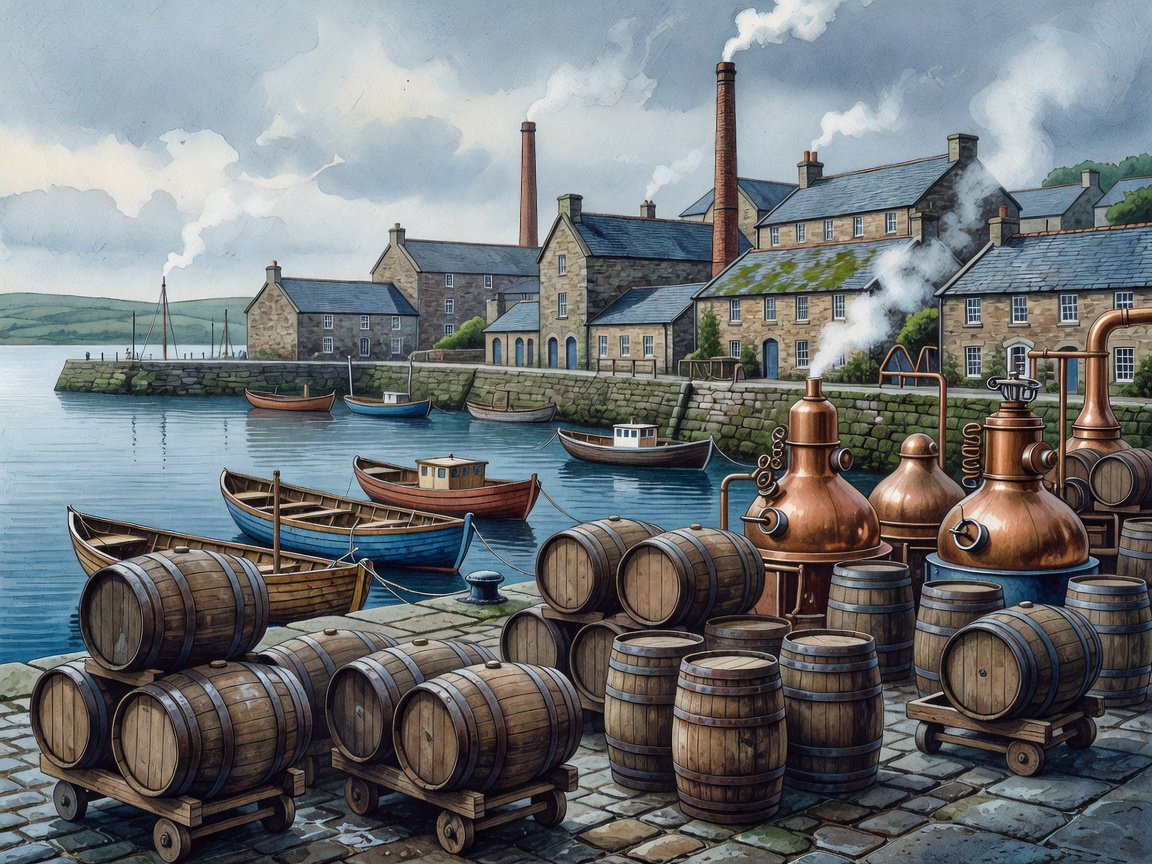
Why is Campbeltown distinctive?
Campbeltown was once a major centre of Scotch whisky production. The town’s location on the Kintyre peninsula offered access to shipping and trade, while local barley, coal and other supplies supported a dense industrial network. The number of operating distilleries later fell sharply, leaving the region with a much smaller group and a strong historical identity.
Campbeltown is often associated with oily texture, salt, fruit, smoke and a slightly industrial character. Those descriptors are not a legal recipe. They are shorthand for recurring impressions shaped by spirit weight, fermentation, still design and maturation.
What makes the spirit feel oily?
Texture is not one compound with a name tag. Heavy spirit can retain more congeners because of still shape, reflux, distillation cuts and copper contact. Fermentation can add weight and fruit, while the final strength and water used for reduction change how texture is perceived.
Campbeltown’s reputation for robust spirit may reflect the interaction of those choices with maturation. A refill cask can preserve oily and savoury notes; an active sherry or wine cask can wrap them in dried fruit and spice. The same underlying weight can therefore appear in very different clothing.
Is the coastal character literal?
Campbeltown’s harbour setting makes maritime language tempting. Salt, brine and sea air are familiar tasting descriptors, but they should not be treated as proof that the sea has directly flavoured the whisky. Warehouse conditions, cask composition, spirit chemistry and expectation all contribute to perception.
Use coastal language as a prompt rather than a conclusion. Ask whether the whisky also shows smoke, mineral dryness, oily texture or sweet oak. A single salty note is not a regional passport.
How does maturation work here?
Campbeltown whisky may be matured in bourbon, sherry-seasoned, refill and other casks, as in other Scotch regions. Cask policy can be especially revealing when the spirit already has weight. First-fill oak may add sweetness and colour quickly; refill wood may allow savoury, fruity or oily notes to remain visible.
Warehouse location can matter, but it should not be isolated from cask type, age and strength. “Coastal maturation” is useful context, not a complete explanation. Whisky remains annoyingly fond of multiple causes.
How should labels be compared?
Begin with the basics: single malt or blend, age, strength, distillery, cask and whether the whisky is peated. Then consider texture. Two Campbeltown whiskies with similar age statements may differ because one is lighter, more smoky, more oak-led or more concentrated. Independent bottlings can offer extra information, but label detail varies.
Compare bottlings with similar cask histories where possible. Otherwise the cask may win the argument before the region gets a word in.
What should you remember?
Campbeltown is valuable precisely because it resists a clean stereotype. Its history explains the regional reputation; production and maturation explain the bottle. Look for weight, savoury notes, fruit, smoke and oak in combination, then allow the whisky to be untidy in peace.